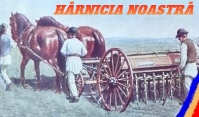
Tabăra legionară de la Cotiugenii-Mari (Soroca, Basarabia) a durat din Iulie până în Octombrie 1934. 86 de legionari au lucrat 97 de zile spre a reconstrui biserica ruinată.
“8 Iulie – 11 Septembrie 1935. La Sf. Mânăstire, încă în ruină, a Arnotei, spre locul de odihnă al lui Matei Basarab nu ducea nici un drum. L-a zidit prin stânci, – pe unde nici Voevodul n’a cutezat să-l taie – munca de peste 2 luni de zile a 242 legionari” (“Tabăra de Muncă”, 1936).
Anul 2016 a fost începutul trezirii… După 8 ani lungi și întunecați de haos, de răbufniri rasiale și de instabilitate facilitate cu inconștiență juvenilă de președintele Barack Obama, trezită din amorțeala și somnolența supunerii, America punea punct unei administrații politice care semănase nesiguranța și incertitudinea, alegându-și un nou președinte. America a revenit astfel la normal, s’a întors iarăși cu fața la Dumnezeu, sătulă de “corectitudinile” impuse, de lozinci, de microbul ateic cultivat și de mizeria socială în care era adâncită…
DESTINUL TRAGIC AL UNOR ROMÂNI AJUNȘI LA ILASCO, MISSOURI
“Pentru că am vorbit de localitatea Ilasco din Missouri unde soarta l-a aruncat pentru prima dată pe Nicolae Tecău în anul 1904, și unde unul dintre frații săi, Avram, și-a pierdut viața într’un tragic accident în anul 1907, se cuvine să-i amintim și pe alți români care, ajunși și ei cu aceleași vise la Ilasco, din nefericire, n’au reușit să le îndeplinească și au suferit deznodământul sfâșietor de care a avut parte Vramu, fratele lui Nicolae Tecău…”
“În anul 1901, cu asentimentul părinților, primul din cei 8 frați din familia Tecău, Avram Tecău, pornea spre Lumea Nouă, în speranța unui viitor mai bun lui și familiei sale din Sebeș, Transilvania, la acel timp sub ocupația regatului ungar. Scrisorile ce le primeau familiile celor plecați mai devreme pe pământul făgăduinței pentru a-și face un rost, le dădeau mari speranțe și altora care, fără un viitor precis, își căutau norocul în viață. Sperau cu toții că, revenind mai apoi la vatră, își puteau construi o casă, cumpăra câteva jugăre de pământ, agoniseala chivernisită cu mare sudoare și grije asigurându-le un trai mai ușor…”
Nicolae Tecău în costum de călușar, Sebeș – Alba, 1904, înaintea plecării spre “Lumea Nouă”…
On June 24, 1927, Corneliu Zelea Codreanu, together with a few battle- tested comrades, founded the Legion of the Archangel Michael. In all his writings, Codreanu, known to all Romanians as “The Captain”, referred to the Legion of the Archangel Michael as the Legionary Movement. This Movement was known in foreign circles and press as “The Iron Guard”.
Of great significance on the occasion of the founding of the Legion of the Archangel Michael are Codreanu’s words:
“Those whose faith in God and the Legion have no boundary should enter our ranks. Those who waver and doubt should stay out.”
In a materialistic world Codreanu based his Movement on the following principles:
I …. FAITH IN GOD
Corneliu Codreanu was of the firm conviction that politics could not be separated from religion. Only men who have respect for the Divine Order can become true patriots.
2…. NATIONAL IDENTITY
Corneliu Codreanu believed that nations are divine creations and not mere products of history and geography. He also believed that every nation has a mission to fulfill in the world. Only nations that betray their God-given mission disappear from the face of the earth.
3 …. MAN — A DIVINE CREATION
Man is a bearer of superior values which transcend his particular existence. As such, being a divine creation, his spiritual values precede all material needs. For the realization of these values, the individual must fight and sacrifice throughout his life.
Among his principles there exists a hierarchical order. The individual is subordinate to his nation, and, in turn, the nation is subordinate to God and His divine laws.
JIANU DANIELEANU GIVES AN INSIGHT INTO THE PRE-WAR RUMANIAN NATIONALIST MOVEMENT
Reprinted with permission from New Nation, No. 7, Summer 1985, the quarterly Journal of the National Front, 50, Pawsons Road, Croydon, Surrey CRO 2QF, England (Liberty Bell).
The following interview with Jianu Danielenau, an officer of the pre-war Iron Guard, was recently conducted for the interests of our readership. We hope that it will stimulate greater interest in Codreanu’s work.
N.N. -Can you give us some sort of idea of the conditions in Rumania that gave rise to the foundation of the Iron Guard?
J.D. -These conditions predated the Iron Guard, which was but a development stage, by about 11 years. We are talking here about a current, a movement whose origins go back to the 1919-20 years. A chaotic situation had been created by the psychosis of a Bolshevik revolution next door. Red infiltrators under the leadership of the Jews and the Jewish press incited our working masses and sowed the seeds of anarchy amongst them.The peasantry, opposed by instinct to this trend for revolution, was disorganised and leaderless, unable to respond. The educated citizenry was vacillating, the State apparatus spineless. Communist invasion was felt to be imminent. But a handful of high school students, headed by Codreanu, acted. Codreanu thus started on his Golgotha in the Spring of 1919. This small but determined move was to lead later, through many trials, tribulations, and imprisonments for him and his band, to the founding of The Legion of Michael the Archangel, and later, the Iron Guard. The appellation ‘Iron Guard’ came into being in 1930 to designate the political arm of the Legion.
N.N. -Could you tell us why you joined the Legionary Movement and what has kept you active on its behalf ever since?
J.D. -The innermost folds of my soul drew me irresistibly to it. I sensed intuitively that the Legionary Movement was, at long last, the organisation really meaning to clean the stables of the political pestilence fouling up the country; to do away with the corruption and moral decadence of the body politic; to end the exploitation of the long suffering peasantry and improve the lot of the worker. And I have stuck to the same faith in these endeavours for I have believed the Legionary Movement to be one of a spiritual regeneration gifted by God to a people perhaps once in a millennium through its predestined leader, Comeliu Z. Codreanu, the “Captain.”