Corneliu
Zelea Codreanu was the Romanian Christian nationalist who founded
the Legionary Movement, often referred to as the Iron Guard among
English speakers. It is surprising that very little attention is
given to him among those in the Anglophone world, 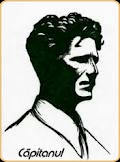 and
when it is given, it is only to heap insults and lies upon his
memory.
and
when it is given, it is only to heap insults and lies upon his
memory.
Attempts
are made to label him as a “dark” and “fanatical” figure,
but even the Jewish-Hungarian historian Nicholas Nagy-Talavera
commented about Codreanu in his book The Green Shirts and the
Others that he “could see nothing monstrous or evil in him.
On the contrary. His childlike, sincere smile radiated over the
miserable crowd, and he seemed to be with it yet mysteriously
apart from it.”
Horia
Sima, Codreanu’s successor as commander of the Legion in 1940,
also described Codreanu in his book Istoria Mişcarii
Legionare (“History of the Legionary Movement”) as a noble
man who had unlimited love for his people and was motivated by
this love: “The characteristic of his soul was goodness. If you
want to penetrate the initial motive which prompted Corneliu
Codreanu to throw in a fight so hard and almost desperate, the
best answer is that he did it out of compassion for suffering
people. His heart bled with thousands of injuries to see the
misery in which peasants and workers struggled.”
It
should be clear that Codreanu was a great man with good
intentions; something that most Liberals and Jews will never
admit. Here we will present an overview of his life and motives
from an unbiased perspective for the sake of the education of
English speakers.
The
Early Life of Codreanu
Corneliu
Zelea Codreanu was born on September 13, 1899 in the small town of
Hushi in Moldavia. His father, Ion Zelea Codreanu, had been a
nationalist fighter all his life, while his grandfather and
great-grandfather were foresters. Corneliu Codreanu had been
educated for five years, from age eleven to sixteen, at the
military academy Manastirea Dealului (“the Cloister on
the Hill”). Codreanu explained how his time there affected him
(quoted from the key book he wrote, For My Legionaries):
“…my military education will be with me all my life. Order,
discipline, hierarchy, molded into my blood at an early age, along
with the sentiment of soldierly dignity, will constitute a guiding
thread for my entire future activity. Here too, I was taught to
speak little, a fact which later was to lead me to hate ‘chatter
boxing’ and too much talk. Here I learned to love the trench and
to despise the drawing room.”
After
Romania declared war on Austria-Hungary in August 1916, Corneliu
Codreanu and his father went to join the Romanian army moving into
Transylvania. Codreanu was not old enough to be accepted as a
volunteer, but still fought with the army in its advance and
retreat across the mountains. However, his father had been wounded
in battle, and insisted that Corneliu return home so that they do
not both die in battle and leave his mother unsupported. However,
a year later in 1917, Codreanu completed his military education in
The Military School of Infantry at Botosani by 1918, but did not
get the chance to join the front before the war ended.
After
graduating from high school in 1919, Codreanu was accepted into
the University of Iasi and left Husi for Iasi. He had already read
many works by the famous professors Nicolae Iorga and A.C. Cuza,
which taught him the ideals for Romania: “1. The unification of
Romanian people. 2. The elevation of peasantry through land reform
and political rights. 3. The solution of the Jewish problem.”
After arriving in Iasi, Codreanu found that the city and
university were heavily influenced by Communist agitators and that
even many professors were Marxists. The Romanian workers were
experiencing terrible working conditions and had very low wages,
and had therefore been drawn to Communism by Marxist
propagandists. Students at the University of Iasi were also
largely converted to Communism, and Communist student meetings
attacked the Army, Justice, Church, and the Crown, essentially
propagating anti-Romanianism.
After
doing some research, Codreanu discovered that the leaders of the
Romanian Communist workers were neither Romanians nor workers. At
Iasi, the “workers’ movement” was led by Dr. Ghelerter along
with Messrs, Gheler, Spiegler, and Schreiber. At the capital,
Bucharest, the leaders were Ana Pauker and Ilie Moscovici. All of
them, Codreanu found, were Jews. Realizing that like in Russia,
where a largely Jewish-led Bolshevik revolution occurred a few
years earlier, Romania was in danger of being taken over by Jewish
Communists who would destroy everything Romanian. He commented:
“If
these had been victorious, would we have had at least a Romania
led by a Romanian workers’ regime? Would the Romanian workers
have become masters of the country? No! The next day we would
have become the slaves of the dirtiest tyranny: the Talmudic,
Jewish tyranny. Greater Romania, after less than a second of
existence, would have collapsed.” (For My Legionaries)
Early
Political Activity
Codreanu
then decided that he quickly needed to take action against the
Communist movement, while the conservative students were not doing
anything sufficient. He joined a small organization, the Guard of
National Conscience, which had been recently created by Constantin
Pancu, who was a well-known steel-worker. The members of the Guard
of National Conscience, with Codreanu and Pancu at the head, made
speeches and rallies to combat Communism and eventually even got
into physical battles with groups of violent Communists. At the
Nicolina railway works, where nearly all the workers were
Communist and a large number of Jews were also present, a general
strike began. Conservative Romanians led by Pancu and Codreanu
then met and marched around placing the national flags on various
buildings while removing Communist red flags. Codreanu even
heroically climbed on top of a factory to throw off the red flag
and put up a Romanian one in its place. By the time he was down,
the Communists workers were so impressed by his efforts that they
allowed Codreanu and Pancu to leave without a fight. Everywhere
across Romania news of this event was carried quickly, and the
Communist movement soon was reduced and had no chance at success.
The
Guard of National Conscience then declared its program for the
improvement of the Romanian nation, which they called “National
Christian Socialism.” Codreanu explained that “It is not
enough to defeat Communism. We must also fight for the rights of
the workers. They have a right to bread and a fight to honor, We
must fight against the oligarchic parties, creating national
workers organizations which can gain their rights within the
framework of the state and not against the state.”
It
was then, by 1920, that Codreanu started focusing on the problems
at Iasi University, when they realized that Romanian universities,
as revealed by the studies of professor Ion Gavanescul, were
swarming with Jews. The Jews, an alien people hostile to Romanian
culture, formed about five percent of the population, and yet in
Iasi a third of the students were Jews. Codreanu knew that the
schools, which had an unreasonable number of Jews when compared to
Romanians, formed the next leading class in Romania. Once the Jews
would become overwhelming in the leading class, Romania’s
national culture would be destroyed, because, as professor Cuza
taught, Jews were an alien people culturally and racially and
would only distort the culture of the nation in which they lived.
This menace disturbed Codreanu and others who loved their Romanian
nation, its culture, and the Orthodox Christian religion. Codreanu
put forth a dramatic exposition of his own feelings about this
issue in For My Legionaries:
“At
Posada, Calugareni, on the Olt, jiu and Cerna rivers, at Turda;
in the mountains of the unhappy and forgotten Moti of Vidra, all
the way to Huedin and Alba-Iulia (the torture place of Horia and
his brothers-in-arms), there are everywhere testimonies of
battles and tombs of heroes. All over the Carpathians, from the
Oltenian mountains at Dragoslavele and at Predeal, from Oituz to
Vatra Dornei, on peaks and in valley bottoms, everywhere
Romanian blood flowed like rivers. In the middle of the night,
in difficult times for our people, we hear the call of the
Romanian soil urging us to battle. I ask and I expect an answer:
By what right do the Jews wish to take this land from us? On
what historical argument do they base their pretensions and
particularly the audacity with which they defy us Romanians,
here in our own land? We are bound to this land by millions of
tombs and millions of unseen threads that only our soul feels,
and woe to those who shall try to snatch us from it.” (For
My Legionaries)
The
Jewish students at the University of Iasi continued encouraging
Communism, but after his victory with Pancu, Codreanu could now
put an end to the bullying of nationalist students by Jewish and
Marxist students. Students who wore Russian caps as a sign of
support for Bolshevism were beaten and their caps burnt. A Marxist
student strike was then defeated by Codreanu and his friends when
they seized the dining hall and insisted that students who do not
work, do not get to eat. Soon afterwards, newspapers owned by Jews
insulted King Ferdinand and Codrenau, to which Codreanu responded
by leading a group to the papers’ offices to wreck the presses.
In
1922, Codreanu graduated from Iasi University’s Faculty of Law,
and by then had made almost the entire university nationalist as
well as having spread pro-Romanian and anti-Jewish concepts to
other universities. In that same year, professors A.C. Cuza and
Nicolae Paulescu, who Codreanu regarded as being some of the
greatest intellectuals to teach Romanians about the Jewish
Problem, published two articles in the magazine Apararea
Nationala (“The National Defense”): “The Science of
Anti-Semitism” (by Cuza) and “The Talmud, the Kahal,
Freemasonry” (by Paulescu, an excerpt from a book). Of this
influential publication, Codreanu wrote: “The articles of
Professors Cuza and Paulescu were religiously read by all the
youth and had everywhere upon students both in Bucharest and in
Cluj a resounding impact. We considered the publication of each
issue a triumph, because it was for us another munitions transport
for combating the arguments in the Jewish press.”
He
continued studying political economy and in the fall of 1922
traveled to Germany to register at the University of Berlin. While
in Berlin he spoke with German nationalists and taught them what
he knew of the Jewish problem. He also heard of Adolf Hitler, who,
upon becoming more prominent, Codreanu thought of as a great
anti-Jewish nationalist leader. It was also in Berlin that
Codreanu heard of Mussolini’s victory in Italy, at which he
declared: “I rejoiced as much as if it were my own country’s
victory. There is, among all those in various parts of the world
who serve their people, a kinship of sympathy, as there is such a
kinship among those who labor for the destruction of peoples.”
The
National Christian Defense League & Reactions to Government
Corruption
In
December, 1922, Codreanu’s education in Germany was suddenly
halted, because a nation-wide anti-Jewish nationalist student
movement exploded in Romania and Codreanu felt he had to return to
join them at that crucial moment. While the students were making a
strike for better conditions in universities as well as a limit on
the number of Jews, Codreanu, Cuza, and a few others decided to
hold a rally in March 3, 1923 in Iasi to create a new
organization. This organization, which they decided to call “The
League of Christian National Defense”, was to be created once
thousands of students would meet at the rally. Codreanu explained
the banner of the National Christian Defense League (L.A.N.C.):
“The cloth of these flags was black – a sign of mourning; in
the center a round white spot, signifying our hopes surrounded by
the darkness they will have to conquer; in the center of the
white, a swastika, the symbol of anti-Semitic struggle throughout
the world; and all around the flag, a band of the Romanian
tricolor – red, yellow and blue.”
However,
just a few weeks afterwards the Romanian government, under
pressure from influential Jews as in Romania as well as abroad,
decided to change the Romanian constitution to allow almost all
Jews to become Romanian citizens. This allowed an alien body in
Romania, different in language, dress, religion, customs, racial
type, and soul, to further infiltrate Romanian society and
undoubtedly Judaize its culture. Romanian nationalists were
shocked and Codreanu so much that he cried. After explaining this
situation in For My Legionaries, Codreanu reflects on how
the great and highly respected Romanian leaders in 1879, after
Romania won independence from the Ottoman Empire, took action to
make sure that Jews would not gain any power in Romania, even
though they were forced to give Jews a theoretical right of
citizenship (which depended on qualification through military
service, thus making only a few Jews citizens, since most Jews did
not want to fight in war). These men, whose works were read by all
nationalist students, were Vasile Conta, Vasile Alecsandri, Mihail
Kogalniceanu, Mihail Eminescu, Bogdan Petriceicu Hajdeu, Costache
Negri, A.D. Xenopol.
The
larger Romanian parties ruling the government also refused to take
any action against the increasing number of Jews flooding into
universities, jeopardizing the nation’s future. Codreanu wrote
of them, “Fundamentally there was no distinction among them
other than differences of form and personal interests-the same
thing in different shapes. They did not even have the
justification of differing opinions. Their only real motivation
was the religion of personal interest.” He also knew, having
been educated by the works of Nicolae Paulescu, that the Jews used
their economic, financial, and media power to influence the
government’s activities. Finally, filled with despair at the
almost complete failure of the national student movement, Codreanu
and his close friends, including Ion Mota, decided that they would
assassinate the top Romanian politicians, top rabbis, and Jewish
bankers. Codreanu wrote explaining why he was more concerned with
going after the politicians:
“We
unanimously agreed that the first and greatest culprits were the
treacherous Romanians who for Judah’s silver pieces betrayed
their people. The Jews are our enemies and as such they hate,
poison, and exterminate us. Romanian leaders who cross into
their camp are worse than enemies: they are traitors. The first
and fiercest punishment ought to fall first on the traitor,
second on the enemy. If I had but one bullet and I were faced by
both an enemy and a traitor, I would let the traitor have it.”
(For My Legionaries)
However,
one of the members of this group, Vernichescu, decided to betray
them and they were arrested before they could take action. Upon
being interrogated by the police, Codreanu decided that honesty
was the only noble way to deal with the situation, and took full
responsibility for the assassination plot. They spent some time in
jail, where they felt a living spiritual force in the icon of
Saint Michael the Archangel at the prison church, which led them
to decide that a new group they would create should be named The
Legion of Michael the Archangel.
The
trial for the assassination plot was held at Bucharest, at which
Codreanu and his friends were acquitted since the jurors, all
Romanians, were sympathetic with their action due to their anger
at the government’s betrayal of the will of the Romanian people.
However, upon leaving, Ion Mota felt that they could not succeed
in their efforts without killing their betrayer, whom they
recently discovered was Vernichescu. Mota shot him in his cell on
the day of the trial and thus remained in prison for a longer time
to be tried for murder later (although he was acquitted there as
well, since few had sympathy for the traitor).
Work
for the L.A.N.C. and the Split with Cuza
After
Codreanu returned to Iasi in May of 1924, he again started working
for the National Christian Defense League. The youth wing of the
L.A.N.C. of which Codreanu was a part, the Brotherhood of the
Cross, was very low on money as well as labor and was no longer
allowed to hold meetings in universities. They resorted to holding
meetings in old wooden barracks, until they finally decided to
build a “Christian cultural home” with their own hands at
Ungheni. With picks and shovels, even making their own bricks with
the help of local brick-makers, they built this meeting house,
which inspired local villagers (who simultaneously learned about
the ideas of the regeneration of Romania).
However,
while they were doing their construction work, they were brutally
beaten several times without any legal reason by policemen.
Codreanu and other students were arrested and hauled off to the
police station in Iasi, where the Police Prefect Manciu had them
tortured while hanging upside-down in chains. Only with the
intervention of Cuza and other leading citizens in Iasi were the
students finally freed. The Jews in the area were extremely happy
over the torture of the students and rewarded Manciu, who received
no punishment for his actions, by buying him a car. Months later
in October, 1925, Codreanu was defending a student in court who
was arrested at the raid on the Ungheni site. In this courtroom,
Manciu burst in with several gendarmes and was prepared to harm
Codreanu again. But Codreanu reacted quickly, refusing to be
illegally beaten and humiliated, by taking out his revolver and
shooting Manciu.
Codreanu
was transferred for trial to Tunul Severin, as far south from
Moldavia as possible in order to make sure that he was not in an
area where everyone sympathized with him. Yet even there, while
the policemen denied torturing the students, the jury knew the
truth of what happened and proclaimed Codreanu innocent. Shortly
after this trial he returned to Iasi and there married Elena
Ilinoiu. From there he and his wife decided to travel to France
where he would earn his doctorate in political economy at the
University of Grenoble.
In
May of 1927, Codreanu returned from France and found that the
L.A.N.C. was split into two factions due to a lack of coordination
and unity (specifically because of a confusion over the expulsion
of a deputy), which he felt was the beginning of failure and
disaster. Codreanu found that Cuza, the leader of one faction, was
perfectly happy with the situation, which caused Codreanu to
realize that Cuza was not a good leader. He commented on Cuza’s
leadership abilities: “If the doctrinaire is expected to master
the science of researching and formulating truth, the leader of a
political movement is expected to master the science and the art
of organization, education and leadership of men, Professor Cuza,
excelling and unsurpassed on the first plane, when brought down on
the practical one showed himself ignorant, awkward...”
After
failing to get the two factions, one led by professor Sumuleanu
and the other by Cuza, to come to an agreement, and also after
seeing Cuza willing to cooperate to an extent with corrupt
politicians from other parties, Codreanu finally decided to split
off. He thought that the youth, which was beginning to form a
faction of its own, should become a totally new organization that
would be better led and more unified. Codreanu and his best
friends visited Cuza as well as Sumuleanu and declared their
intentions to create a movement on their own. The students met at
the “Christian cultural home” and founded their own fully
independent group, the Legion of Michael the Archangel, which used
the icon of Saint Michael as its symbol.
The
Legion of Michael the Archangel
The
Legion of Michael the Archangel did not present a party program,
and Codreanu did not even consider the Legion to be a political
movement, but rather a spiritual movement whose aim was to improve
Romania. He asserted that even the best political programs would
be compromised if the Romanian people were corrupted by the
influence of Jews and greedy politicians. In The Nest
Leader’s Manual, he wrote: “The Politician’s goal is to
build a fortune, ours is to build our homeland flowering and
strong. For her we will work and we will build. For her we will
make each Romanian a hero, ready to fight, ready to sacrifice,
ready to die.”
The
Legion was to be more of a school and an army, rather than a
political group, for the creation of a New Man (Omul Nou),
a generation of Romanians who, through their Christian
spirituality and nationalism, would create a Greater Romania freed
from darkness and oppression. A spiritual revolution would be the
prerequisite for a political revolution. He declared in For My
Legionaries:
“From
this Legionary school a new man will have to emerge, a man with
heroic qualities; a giant of our history to do battle and win
over all the enemies of our Fatherland, his battle and victory
having to extend even beyond the material world into the realm
of invisible enemies, the powers of evil. Everything that our
mind can imagine more beautiful spiritually; everything the
proudest that our race can produce, greater, more just, more
powerful, wiser, purer, more diligent and more heroic, this is
what the Legionary school must give us! A man in whom all the
possibilities of human grandeur that are implanted by God in the
blood of our people be developed to the maximum. This hero, the
product of Legionary education, will also know how to elaborate
programs; will also know how to solve the Jewish problem; will
also know how to organize the state well; will also know how to
convince the other Romanians; and if not, he will know how to
win, for that is why he is a hero. This hero, this Legionary of
bravery, labor and justice, with the powers God implanted in his
soul, will lead our Fatherland on the road of its glory.” (For
My Legionaries)
The Legion, because it needed a strong structure of organization,
was designed as a hierarchical system. The basic unit of the
Legion was called a nest, numbering from simply three to thirteen
members. At each level of the Legion, from the nest to town, city,
county, and regional sections up to the Căpitanul
(“Captain”), the top leadership role which Codreanu attained,
the leaders were not chosen by election but by bravery and skill.
The movement would be opposed to the republican system, which
Codreanu observed did not really represent will of the people, and
replace it with a new form of government in which a leader would
be selected rather than elected, and would not be
able to do what he personally wishes, but only what is best for
the nation. He explained the role of the leader in this way: “He
(the leader) does not do what he wants, he does what he has to do.
And he is guided, not by individual interests, nor by collective
ones, but instead by the interests of the eternal nation, to the
consciousness of which the people have attained. In the framework
of these interests and only in their framework, personal interests
as well as collective ones find the highest degree of normal
satisfaction.”
All
the members of the Legion were educated in Christian virtues, love
of nation, and were taught to be disciplined and disinterested in
battle. The Legionaries marched and sang national songs together
along with volunteering to help impoverished lower class Romanians
(especially peasants) in building, repairing houses, assisting in
farming, and other areas of work. The Legion’s nests were to be
self-sufficient, not reliant on buying materials for survival.
Codreanu
and other nationalist Romanians had witnessed for many years the
suffering of the Romanian people at the hands of the Capitalists,
which were largely Jews only interested in profit, and had no
sympathy for Romanians. The peasants were extremely poor, in some
areas even to the point of starvation, and were barely surviving
by borrowing money at interest rates from Jewish money-lenders.
Jew-owned companies were chopping down forests at alarming rates,
destroying the source of livelihood for certain groups of peasants
such as the Moti. Jewish speculators were buying up land and
malnutrition was widespread, making the situation seem grim for
the Romanian people.
The
Legionary Movement grew, spreading through Romania and determined
to change this situation by finally banishing the Jews who usually
had little sympathy for Gentiles. Through charity and volunteer
work, they revealed that they were not just another corrupt party
interested in power and money. By 1929, in order to progress
further, the Legionaries were forced to create a political branch
of the Legion to run for elections. This organization was called Garda
de Fier (“Iron Guard”), which is the name by which the
Legionary Movement would later be commonly called.
Throughout
the early 1930s Iron Guard members marched through villages,
wearing the green-colored uniform with a white cross sewn on their
shirts. Top Legionaries, including Codreanu, were making speeches
and marches, sometimes at night, calling for the regeneration of
Romania and the expulsion of the Jews. But influential Jews and
established political parties were determined to stop the Iron
Guard. In certain areas, Codreanu and other top Legionaries were
illegally barred from speaking and often beaten by policemen as
well as by Jews, usually without provocation. Unfortunately, they
also got into clashes with members of the L.A.N.C., also called
Cuzists, who viewed them as a threat to their own success.
Eventually,
by 1932, Codreanu and his father entered the Romanian National
Assembly through elections in Moldavia. Despite this, the
treatment of Legionaries got worse as time passed, and all
members, including girls, were beaten and humiliated. By 1933, the
Liberal Party, led by Ion Duca, was elected into power and
declared that it would exterminate the Iron Guard.
In
that same year, Duca’s government, after having already
terrorized, tortured, and assassinated several Legionaries, went
ahead and banned the Legion to keep it from participating in
elections, leading to the arrest of about 18,000 Legionaries
(although Codreanu succeeded in hiding). The Legionaries Nicolae
Constantinescu, Doro Belimace and Ion Caranica then assassinated
Ion Duca in revenge and immediately turned themselves in to the
police. Following this, the tortures and assassinations of
Legionaries by the government multiplied.
By
the fall of 1936, the Legion decided to send a symbolic team of
seven top Legionaries to Spain to help Francisco Franco fight the
Marxist Republicans. While fighting there, Ion Mota and Vasile
Marin died at Majadahonda, near Madrid. At the funeral, before the
bodies of Mota and Marin, Codreanu declared in an “Oath of
Ranking Legionaries” (1937): “That is why you are going to
swear that you understand that being a Legionary elite in our
terms means not only to fight and win, but it also means above all
a permanent sacrifice of oneself to the service of the Nation;
that the idea of an elite is tied to the ideas of sacrifice,
poverty, and a hard, bitter life; that where self-sacrifice ends,
there also ends the Legionary elite.” Later, there were large
funeral processions all over Romania, and in the next year a new
elite unit in the Legionary Movement was created, the
“Mota-Marin Corps.”
In
March of 1938, Codreanu sent a letter to Nicolae Iorga to complain
about Iorga’s campaign of calumny against the Legion, in which
he told Iorga that he is a dishonest person who has taken part in
the oppression of innocent people. Iorga, insulted, then filed a
lawsuit against Codreanu, which resulted in King Carol II (who had
earlier established himself as a dictator, changing the
constitution) and his Minister, Armand Calinescu, arresting
Codreanu (and then thousands of Legionaries) and condemning him to
six months in prison. The government organized a second trial to
take place, closed to the public and extremely biased, in which
Codreanu was sentenced to ten years in prison for unreasonable and
unproven accusations of sedition and treason. Calinescu, a few
months later, then had the military police murder Codreanu, acting
outside of the law (this occurred on November 30, 1938).
After
Codreanu’s death, terrible persecutions of the Legion continued,
and eventually a group of nine Legionaries assassinated Calinescu.
General Argeseanu, the new leader in the Romanian government,
afterwards executed 252 Legionaries and imprisoned thousands more,
intensifying the persecution yet more. By 1940, The Legionaries,
under the leadership of Horia Sima, attempted to negotiate with
King Carol II. Later that year, General Ion Antonescu would
finally overthrow King Carol’s government, resulting in the
creation National Legionary State ruled jointly by Sima and
Antonescu.
The
Legionary Movement After Codreanu
Horia Sima joined the Legion of the Archangel Michael in November
of 1927, the same year it was founded by Corneliu Zelea Codreanu.
But Sima was prominent only when he first became a leader of the
Legion in October of 1938, after a new Legionary Command (of which
Sima was a part) was organized due to the fact that Corneliu
Codreanu was imprisoned and other top Legionaries arrested or
assassinated. In 1940, Sima and Ion Antonescu launched a coup
against the tyrannical King Carol II and together created the
National Legionary State. It was only after this state was
established that Horia Sima became the top commander of the
Legion. Of the establishment of the National Legionary State,
Horia Sima said in his book Era Libertaţii – Statul naţional-Legionar
vol. 1 (“It was Freedom – National Legionary State vol.
1″) that “Rarely in our people’s history has there been
experienced a moment of collective exaltation of as impressive
enthusiasm as that of the popular masses after the expulsion of
King Carol from the country. You cannot even compare the intensity
of national sentiment with that rush of joy in the annexed
provinces, when the Union of 1918 was formed.”
Sima
and Antonescu then proceeded to nationalize or Romanianize the
nation’s economy, trade, industry, and mass media. Jews had
previously gained an unreasonable degree of ownership of
factories, companies, newspapers, cinemas, and various economic
positions. Romania would no longer allow the Jews, an alien
ethnicity whose influence previously had negative effects on
Romanian life, to dominate their nation’s economy and media and
distort Romanian culture and lifestyle.
A
note needs to be made of an event that occurred in the Legionary
State. On November 25, 1940, the bodies of Codreanu and other
murdered by Calinescu were exhumed. In two days, by November 27,
the Legionaries who were working in that exhumation were so
disturbed and angered upon seeing the bodily remains of Codreanu
and the other martyrs that they could not restrain themselves from
executing 64 members of previous political regimes imprisoned at
Jilava who were involved in imprisoning, torturing, and massacring
Legionaries in the past. Among these executed for their past crime
was Nicolae Iorga.
Iorga’s
death was oftentimes, and still is, used as propaganda against the
Legionary Movement by philo-semites, Jews, and Communists (it was
used by the Romanian Communist regime during its reign) in order
to label Horia Sima and the Legion as “terrorists” and
“criminals.” Sima wrote in his 1990 book Era Libertaţii
– Statul naţional-Legionar vol. 2 (“It was Freedom
– National Legionary State vol. 2″) that “Iorga’s
killing offered our enemies a weapon of great efficiency, which
they fired into the Movement and which has not left their hands
even today.” Of course, the Communist propaganda usually
overlooks the fact that Iorga was very anti-Semitic and very
anti-Communist like many other Romanians, and also that Iorga
brought his death upon himself by his own actions. It has also
been pointed out that Traian Boeru, Iorga’s assassin, was a
Communist agent and that the Legionaries involved would not have
actually killed Iorga had this agent not been there. The facts of
the situation are not fully clear, but what is clear is that it is
foolish and unreasonable to condemn the Legionary Movement based
on Iorga’s death, especially when considering how many
“democratic” movements throughout history are not condemned,
but praised, despite the murders they had committed.
Earlier
in November of 1940, Legionary Romania had joined the Tripartite
Pact of National Socialist Germany, Italy, and Japan, bringing
Romania into World War II on the side of the Axis powers. However,
the dual leadership of Sima and Antonescu was imperfect, since
Antonescu was extremely ambitious and wanted to gain complete
power by personally becoming the leader of the Legionary Movement.
In January of 1941, Antonescu prepared a personal meeting with
Adolf Hitler without notifying Sima or any other Legionary leaders
(which resulted in Sima being unable to participate) and left for
Berlin on January 13th. Antonescu discussed with Hitler the
possibility of a war with the Soviet Union and the conditions for
Romania’s participation in that war. Antonescu argued that the
Romanian army was on his side and if Hitler wanted Romania to join
in fighting the U.S.S.R., Germany must remain neutral in the event
of a conflict between him (Antonescu) and the Legionary Movement.
General
Antonescu in a few days then prepared a coup d’etat
against the Legion by having anti-Legionary propaganda spread
through rumors claiming that Legionaries were undisciplined,
engaging in scuffles with military members, and of questionable
use in war. Antonescu then took various anti-Legionary actions,
including removing various prominent Legionaries from government
positions and eventually began to arrest and imprison Legionary
leaders. In this situation, on January 21 of 1941, Horia Sima and
a large number of Legionaries rebelled against Antonescu, and
although they would later tried to negotiate an agreement,
Antonescu harshly repressed the Legionaries. In another meeting
with Hitler, Antonescu convinced the German leader that the
Legionaries were “fanatics” that needed to be suppressed. The
Romanian government under Antonescu then became highly
authoritarian and began to arrest and kill hundreds of
Legionaries. By April of 1941, Horia Sima and many other members
of the Legion fled into German territory and were confined to
compulsory quarters in certain camps, although they were treated
well by the Germans.
During
World War II, Romania under Antonescu took part in Operation
Barbarossa, fighting with the Axis against the Soviet Union.
After the Battle of Stalingrad was lost, the Soviets expanded
westwards. As the Soviet armies were moving into Romania in 1944,
Antonescu contemplated making peace with the Allies but decided to
firmly stay in the Axis alliance. Because of this decision, the
Royal Coup of August 23, 1944 occurred, in which groups led by
King Michael I decided to remove Antonescu from power by
surrounding him and having him arrested. Romania then switched
sides in World War II, joining the Allies. The Germans reacted to
this by releasing Horia Sima and the other Legionaries. Upon this
release, Sima established, with German help, a Legionary
government in Vienna to assist in the battle against Communism.
However, by 1945 the Soviet conquest could not be stopped, so they
retreated westwards.
Sima
and most other Legionaries fled to Italy or to parts of Germany,
where they established Romanian Committees to help Romanian
refugees fleeing from Communism get into Western Europe. By
1949–50, Sima and other top Legionaries started collaborating
with French, American, and British authorities to fight Communism,
especially by assisting emigrants from the Soviet Union (which
would weaken Communist regimes in Eastern Europe). The
French-American military then assisted in preparing Legionaries to
move into Romania in order to physically fight Communists and
start an anti-Communist uprising in that nation. By 1954, the
agreement was cancelled due to Soviet infiltration of British
intelligence (led by Kim Philby) and because Western powers wanted
to establish a “peaceful coexistence” with Stalin’s regime.
Although
some Legionaries in Romania continued fighting the Communists into
the 1960s, most Legionaries went into exile, scattered across
nations in Europe, North America, South America, and Australia.
Horia Sima, from the 1950s onwards, lived in various places
throughout Germany, Italy, France, and finally Franco’s Spain
(where he received political refugee status). Various dissident
groups created factions splitting off from Sima’s rule, although
he was considered leader by the majority of Legionaries. For
decades, most Legionaries could not do much other than publish
articles, books, and translations. However, in 1989 after
Ceausescu’s Communist regime was overthrown in Romania, Sima and
other Legionaries took the opportunity to attempt to revive
Legionarism in Romania. Legionaries created various parties,
although Sima could not go to Romania himself since he had been
sentenced to death there since 1946. Unfortunately, the Legionary
parties came into conflict with each other, and none could
establish a large movement. Sima died in May 25, 1993 in Madrid,
Spain unable to end the quarrels among the various groups.
However, the Legionary Movement still continues in its new form,
and modern Legionaries today are still working to educate the
younger generations about the truth of Legionary history.
B
I B L I O G R A P H Y
•
Codreanu, Corneliu Zelea. For My Legionaries. Third
Edition. Translated and edited by Dr. Dimitrie Gazdaru. York, SC,
USA: Liberty Bell Publications, 2003.
•
Codreanu, Corneliu Zelea. The Nest Leader’s Manual.
USA: CZC Books, 2005.
•
Codreanu, Corneliu Zelea. The Prison Notes. USA:
Reconquista Press, 2011.
•
Crisan, Radu Mihai. Istoria Interzisă
(“Forbidden History”). Bucharest: Editura Tibo, 2008.
•
Crisan, Radu Mihai. “The Secret of the Fire Sword”.
Bucharest: University Book Publishing House, 2006.
•
Evola, Julius. “The Tragedy of the Romanian ‘Iron
Guard’: Codreanu”. Conway, SC, USA: Thompkins & Cariou,
2004.
•
Nagy-Talavera, Nicholas. The Green Shirts & The
Others: A History of Fascism in Hungary and Rumania. Stanford,
CA: Hoover Institution Press/Stanford University Press, 1970.
•
Ronnett, Alexander E. and Bradescu, Faust. “The Legionary
Movement in Romania.” The Journal of Historical Review,
vol. 7, no. 2, pp. 193-228.
•
Ronnett, Alexander E. Romanian Nationalism: The
Legionary Movement. Chicago: Romanian-American National
Congress, 1995.
•
Sima, Horia. Era Libertaţii - Statul naţional-Legionar
vol. 1 ("It was Freedom - National Legionary State vol.
1"). Madrid: Editura "Miscarii Legionare, 1982.
•
Sima, Horia. Era Libertaţii - Statul naţional-Legionar
vol. 2 ("It was Freedom - National Legionary State vol.
2"). Madrid: Editura Miscãrii Legionare, 1990.
•
Sima, Horia. Istoria Mişcarii Legionare
("History of the Legionary Movement"). Timişoara:
Editura Gordian, 1994.
•
Sima, Horia. Guvernul National Român de la Viena
("Romanian National Government in Vienna"). Madrid:
Editura "Miscarii Legionare, 1993.
•
Sima, Horia. Prizonieri ai Puterilor Axei
(“Prisoners of the Axis Powers”). Madrid: Editura "Miscarii
Legionare, 1990.
•
Sima, Horia. Sfârşitul unei domnii sângeroase
("The End of a Bloody Reign"). Madrid: Editura "Miscarii
Legionare", 1977.
•
Sima, Horia. The History of the Legionary Movement.
Liss, England: Legionary Press, 1995.
•
Sturdza, Michael. The Suicide of Europe: Memoirs of
Prince Michael Sturdza, Former Foreign Minister of Rumania.
Boston & Los Angeles: Western Islands Publishers, 1968.